LEAP into Sustainability and Supply Chain Quality Transformation with Actionable Insights
Join us from November to December, 2024 for our 3rd Sustainability and Supply Chain Quality Transformation Summit 2024 (Online), hosted by Bureau Veritas CPS. Don't miss out and Register Online Today for Free. Engage with industry leaders, clients, and our sustainability and supply chain specialists to gain insightful knowledge and actionable guides covering your entire product lifecycle, from concept design to end-of-life.
Global landscape continues to evolve at an unprecedented pace. Geopolitical uncertainties, complex sustainability regulations, and shifting consumer behaviors are reshaping the way businesses operate and compete. We'll address these challenges in this year's summit which include:
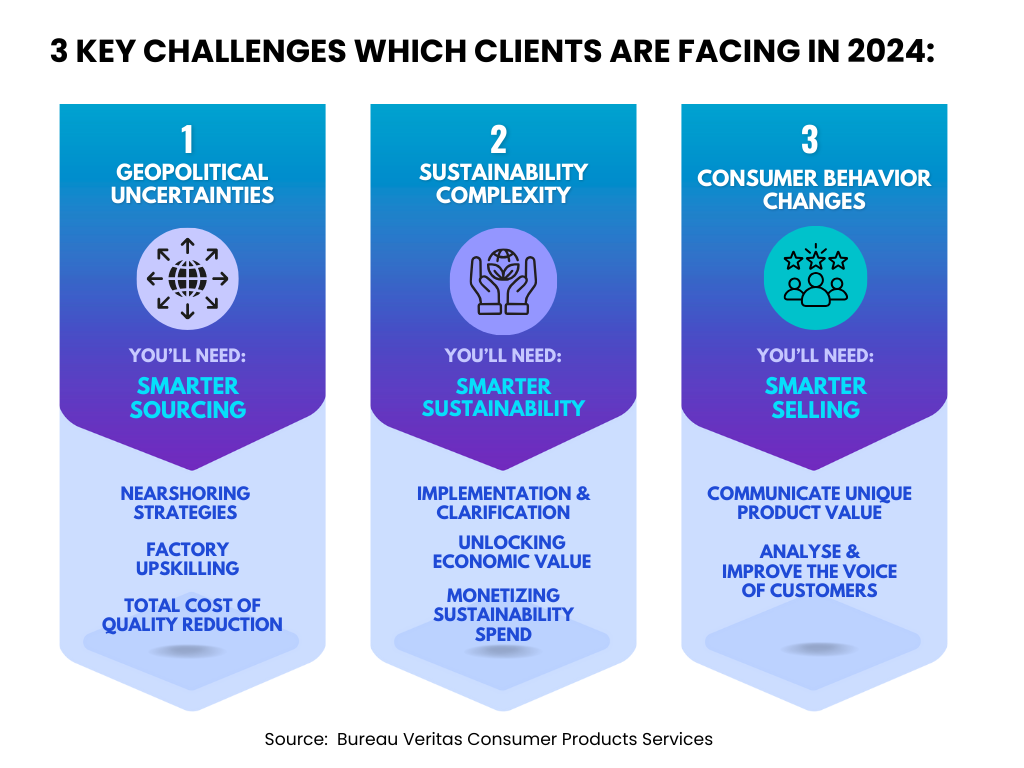
Geopolitical Uncertainties - With constant global conflicts, trade restrictions, and geopolitical tensions near critical shipping choke points, leaders must mitigate risks, enhance agility, and prioritize supply chain transformation and nearshoring strategies. to meet with these market dynamics.
Sustainability Economic Value - As sustainability becomes a top priority for stakeholders, companies must navigate complex regulations and integrate environmental, social, and governance (ESG) considerations into their business strategies. At the same time, leaders are looking for reducing the environmental and social costs of supply chains while creating economic value in sustainability as one of their priorities.
Consumer Behaviour Changes - As inflation rises, consumers are increasingly sensitive to prices, making them reluctant to pay a premium for sustainable products. Although many consumers express a willingness to support sustainable brands, the reality of a cost-of-living crisis often leads them to prioritize affordability over sustainability. With Retailers and manufacturers face pressure on already thin margins due to rising costs throughout the supply chain. How can businesses continue to invest sustainable practices and innovations, while cutting costs to meet the consumer demands.